

Behluli: Kurti opened the purse, but people cannot be bought cheaply
Mirlind Behluli argues that the Kurti government’s recent cash measures are not winning back popular support — a credible point, though one that warrants closer review of social effects.

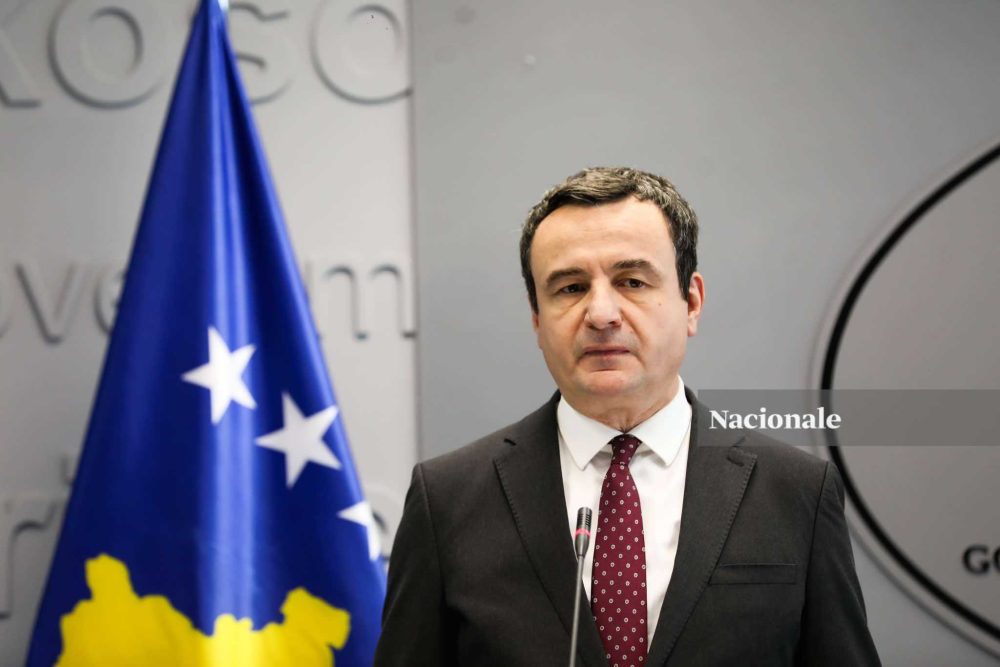
PRISHTINA — In a second column in Nacionale this week, Mirlind Behluli argues that Prime Minister Albin Kurti’s recent financial packages — direct payments, subsidies and selective raises — are not producing the rise in support the governing team may have hoped for.
His thesis can be summarised as follows: the Kosovo voter is not as cheap as he looks. Even when public money lands in his pocket, he keeps it analytically separate from his judgement of governance, transparency and long-term results. Behluli lists examples of measures that, in his account, have had limited effect on polling, and suggests that citizens distinguish between structural investment and pre-election gestures.
The columnist’s argument touches a classic nerve in Kosovo politics: the relationship between social promises and institutional trust. If citizens have lost faith in the political process, then even the largest transfer cannot offset a perceived shortfall in fairness.
The Argument
An assessment of the column should be balanced. On one hand, Behluli is right that elections are not won by transfers alone. On the other, the Kurti government’s social packages, independently of electoral timing, have covered vulnerable groups — pensioners, low-income families — for whom the material impact is immediate and real.
This means the column should be read as a political observation, not a full evaluation of social policy. Both things can be true at once: the packages are necessary, and they do not suffice to buy political support.
Paraphrasing Behluli, the public has a longer memory than the electoral cycle — and a government that behaves as if that memory can be cleared by a bank transfer is making the most basic political error.
The broader lesson is familiar in mature democracies: public money matters, but it is no substitute for good governance. Sound policies need time, and civic trust is built with very little money — and a great deal of consistency.
Source: Nacionale — Opinion column by Mirlind Behluli